Batik as indonesian textile painting art
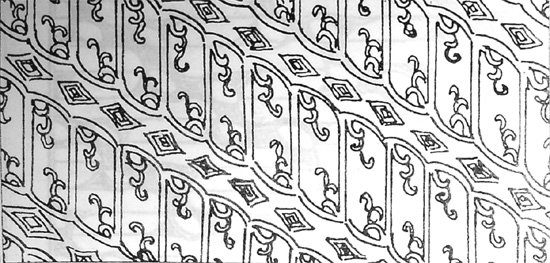
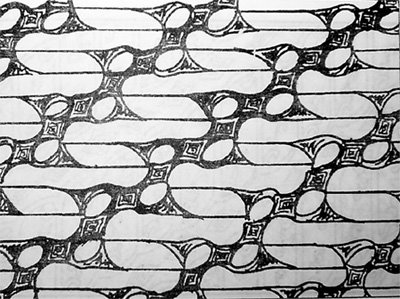
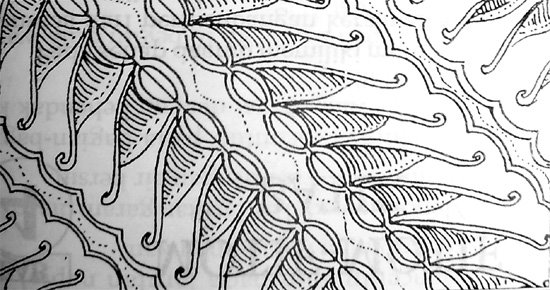

 Batik is generally thought of as the most quintessentially Indonesian textile. Motifs of flowers, twinning plants, leaves buds, flowers, birds, butterflies, fish, insects and geometric forms are rich in symbolic association and variety; there are about three thousand recorded batik patterns.
The patterns to be dyed into the the clothe are drawn with a canting, a wooden 'pen' fitted with a reservoir for hot, liquid wax. In batik workshops, circles of women sit working at clothes draped over frames, and periodically replenish their supply of wax by dipping their canting into a central vat. Some draw directly on the the cloth from memory; others wax over faint charcoal lines.
There are some famous batik motif, such as Yogyakarta and Surakarta motif. The pictures above are some motif from Yogyakarta and Surakarta style. Just click the image to know the name of the motif. You can mix and use batik as decoration or clothes or something else. Javanese batik as one of the best painting textile art with elegance ethnic style. to be continued....
Wayang kulit - ethnic carving shadow puppet

There are various types of wayang, but, in Java, the most important is the wayang purwa, which uses kulit (flat cut-outs of painted leather puppets) whose shadows are projected on a large white screen. Wayang purwa makes use of the purwa repertoire: the oldest stories about cosmic events and divine will are represented; the course of events is seen as being predestined, part of a cosmic law.
The Javanese word purwa means ‘beginning’ or ‘first’ and derives, probably, from the Sanskrit parwan, a word used to denote the chapter of the Mahabharata.
The making of shadow puppets is a long and painstaking process. Skin of a female buffalo of about four years of age, the ideal type for texture and strength, is dried, scraped and cured for up to ten years to achieve stiffness and eliminate warping and splitting.
On maturity, skin are carved and pierced to fashion the required character. This technique involves extensive knowledge of iconography and physiognomy, since all lines – angles of the head, slant of the eyes and mouth, profile of the body – are specific to the the character.
When carving is completed, the traditional pigments including powdered burnt bone for white, lampblack, indigo, yellow ochre and cinnabar for red in a gelatinous medium mixed from dried egg-white. Gold leaf and pigment are applied in a medium of protein glue derived from fish bones.
The cempurit, or manipulating rods, are made of buffalo horn, while the studs attaching the jointed arms to the torso are of metal (sometimes gold), bone, bamboo or, in rare courtly examples, gold studded with diamond.
Source : www.semarweb.com


